

Time:2025-12-10 Views:0
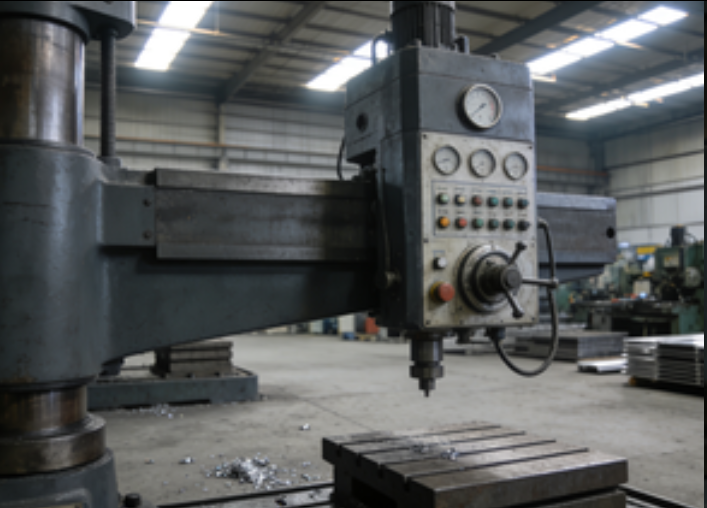
Stamping parts produced using a hydraulic press are precision-manufactured components widely used in automotive, aerospace, electronics, and appliance industries—thanks to the hydraulic press’s ability to deliver high, consistent force for shaping and forming metal sheets (e.g., steel, aluminum, copper) into complex or heavy-duty stamping parts. Unlike mechanical presses that rely on flywheels and crankshafts, hydraulic presses use hydraulic fluid (typically mineral oil) to transmit force, enabling them to generate adjustable pressure ranging from 10 tons to over 10,000 tons—ideal for producing stamping parts of varying thicknesses (0.1mm to 20mm) and sizes, from small electronic connectors to large automotive chassis components.
A key advantage of using hydraulic presses for stamping parts is their uniform force distribution. The hydraulic system applies pressure evenly across the entire die surface, ensuring the metal sheet is formed consistently without uneven stress or deformation—critical for stamping parts that require tight tolerances (often ±0.01mm), such as automotive brake pads or aerospace fasteners. This uniform force also allows for deep drawing, a stamping process where metal sheets are pulled into complex 3D shapes (e.g., kitchen sinks, automotive fuel tanks)—a task mechanical presses struggle with due to their pulsating force.
Hydraulic presses also offer excellent control over the stamping process. Operators can adjust parameters like pressure, speed, and dwell time (the duration force is applied) to match the material properties and part design. For example, softer metals like aluminum require lower pressure and slower speed to avoid cracking, while high-strength steel needs higher pressure for proper forming. This flexibility makes hydraulic presses suitable for producing a wide range of stamping parts, from thin-walled electronic enclosures to thick, load-bearing structural components.
Durability is another strength of hydraulic press-produced stamping parts. The consistent force applied by the press ensures the metal’s internal structure is formed uniformly, reducing the risk of weak points or fatigue cracks in the final part—extending the part’s lifespan, especially in high-stress applications like automotive suspension components. Additionally, hydraulic presses have fewer moving parts than mechanical presses, leading to lower maintenance costs and longer equipment life, making them a cost-effective choice for high-volume stamping part production (e.g., 10,000+ parts per day). For manufacturers seeking precision, versatility, and reliability in stamping part production, hydraulic presses are an indispensable tool.
 China management center add.
204, Building A, Phase 3, Jiewei Industrial Park, Shangmugu Community, Pinghu Street, Longgang District, Shenzhen, China
 Headquarters tel.
+86 134 3077 5139
 E-mail.


 CN
CN


