

Time:2025-12-08 Views:0
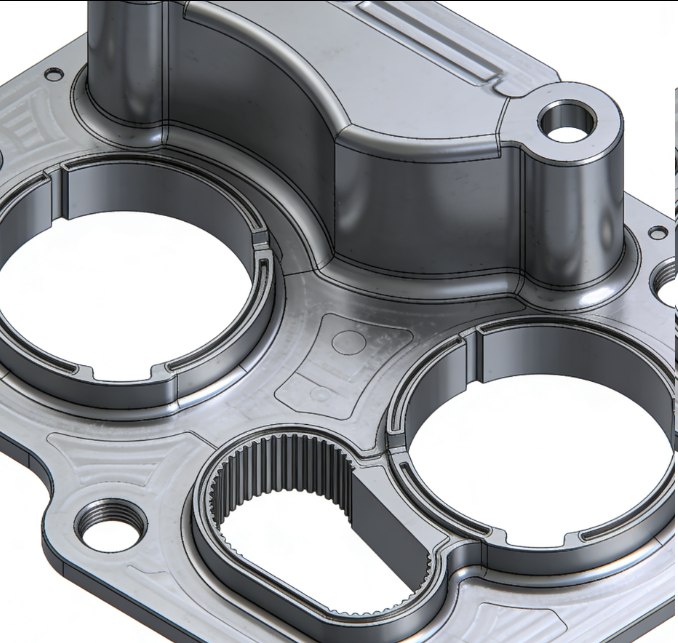
The integration of Computer-Aided Design (CAD) and Computer-Aided Manufacturing (CAM) is the digital backbone of modern stamped parts production, bridging the gap between theoretical product specifications and physical manufacturing reality. This symbiotic relationship ensures that stamped components are not only structurally sound but also optimized for the specific constraints and capabilities of the stamping process and the tooling machinery.
The process begins with CAD, where engineers create high-fidelity 3D digital models of the part geometry, defining all dimensions, tolerances, and material specifications. This digital model is the "single source of truth." However, stamping is a non-linear metal forming process, so the part geometry must be verified for formability. This leads to the critical use of CAE (Computer-Aided Engineering) tools, which analyze the CAD model for potential manufacturing defects like tearing, wrinkling, and excessive thinning *before* any physical metal is cut.
Once the part design is verified, the CAM phase commences, focusing on tooling design and NC programming. Using the final part CAD model, specialized CAM software is used to design the complex stamping die set—including the punch, die block, draw beads, and trim steels. The software simulates the die's operation to ensure proper metal flow and stripping action. Critically, the CAM system automatically generates the NC (Numerical Control) codes required to program the sophisticated CNC machining centers, EDM (Electrical Discharge Machining) machines, and sometimes even the 3D printers used to manufacture the die components with extreme precision.
This CAD/CAM integration accelerates the tooling lead time. By leveraging the digital design data, the CAM software automates much of the complex surfacing and toolpath generation required to machine the die components. This automation significantly reduces human error and accelerates the time it takes to move from a validated part design to a finished, installable die set, directly impacting the overall speed of new product introduction (NPI).
Furthermore, the integration facilitates seamless Engineering Change Order (ECO) management. If a change is made to the part's CAD file, the change is immediately propagated through the CAM system, allowing engineers to quickly update the die design and regenerate the NC toolpaths. This digital linkage minimizes manual rework and ensures that the physical tooling remains perfectly synchronized with the latest approved product design, which is paramount for maintaining high-quality standards in stamping.
 China management center add.
204, Building A, Phase 3, Jiewei Industrial Park, Shangmugu Community, Pinghu Street, Longgang District, Shenzhen, China
 Headquarters tel.
+86 134 3077 5139
 E-mail.


 CN
CN


