

Time:2026-01-13 Views:0
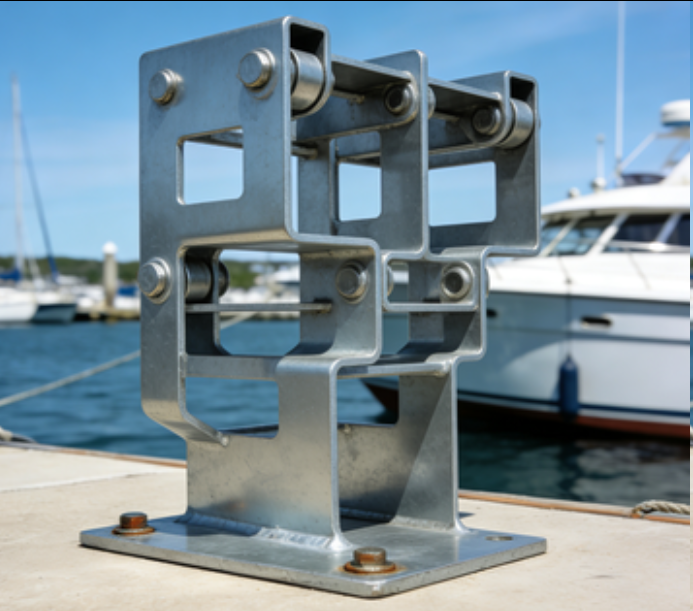
Sheet metal marine accessories play a vital role in the construction, operation, and maintenance of ships and other marine vessels. The harsh marine environment, characterized by high humidity, saltwater corrosion, and strong mechanical stresses, demands components that are durable, reliable, and capable of withstanding extreme conditions. Sheet metal, with its malleability and versatility, offers an ideal solution for manufacturing a wide range of marine accessories.
One of the key applications of sheet metal in marine accessories is in the fabrication of structural components. For example, bulkheads, which are used to divide the interior of a ship into compartments, are often made from sheet metal. These bulkheads need to be strong enough to withstand the hydrostatic pressure of the water and prevent the spread of flooding in case of hull damage. Sheet metal is formed and welded to create robust, watertight structures. The choice of metal for marine applications is crucial; stainless steel is commonly preferred due to its excellent corrosion - resistance properties. Its ability to resist rusting and pitting caused by saltwater exposure ensures the longevity of the bulkheads and other structural components, maintaining the integrity of the ship's hull.
Sheet metal is also used to produce various marine hardware such as brackets, mounts, and fasteners. These accessories are essential for securing equipment, pipes, and cables within the ship. They need to be precisely fabricated to fit specific installation requirements. Through processes like cutting, bending, and punching, sheet metal can be shaped into complex geometries to meet the diverse needs of marine installations. For instance, custom - made brackets are designed to hold navigation lights, ensuring they are properly positioned and firmly attached, even in rough seas. The strength and durability of sheet metal - made hardware provide reliable support, reducing the risk of equipment failure during operation.
In addition, sheet metal is employed in the manufacturing of ventilation and exhaust systems for ships. These systems are crucial for maintaining a healthy and safe environment within the vessel by removing stale air, smoke, and harmful gases. Sheet metal ducts are fabricated to specific dimensions and shapes to optimize air flow. They are designed to be lightweight yet strong, minimizing the additional load on the ship while ensuring efficient ventilation. The smooth surface of sheet metal also reduces air resistance, enhancing the performance of the ventilation system. Moreover, the corrosion - resistant properties of the metal used in these systems prevent degradation over time, ensuring continuous and reliable operation throughout the ship's service life.
The manufacturing of sheet metal marine accessories involves a series of precise processes. Advanced computer - aided design (CAD) and computer - aided manufacturing (CAM) technologies are utilized to create detailed designs and control the fabrication process. CNC (Computer Numerical Control) machines are then used for cutting and bending the sheet metal with high precision. Welding techniques, such as TIG (Tungsten Inert Gas) and MIG (Metal Inert Gas) welding, are employed to join the metal parts together, creating strong and durable structures. Quality control measures are strictly implemented at every stage of production to ensure that the marine accessories meet the stringent international standards and regulations for marine applications.
 China management center add.
204, Building A, Phase 3, Jiewei Industrial Park, Shangmugu Community, Pinghu Street, Longgang District, Shenzhen, China
 Headquarters tel.
+86 134 3077 5139
 E-mail.


 CN
CN


