

Time:2025-12-17 Views:0
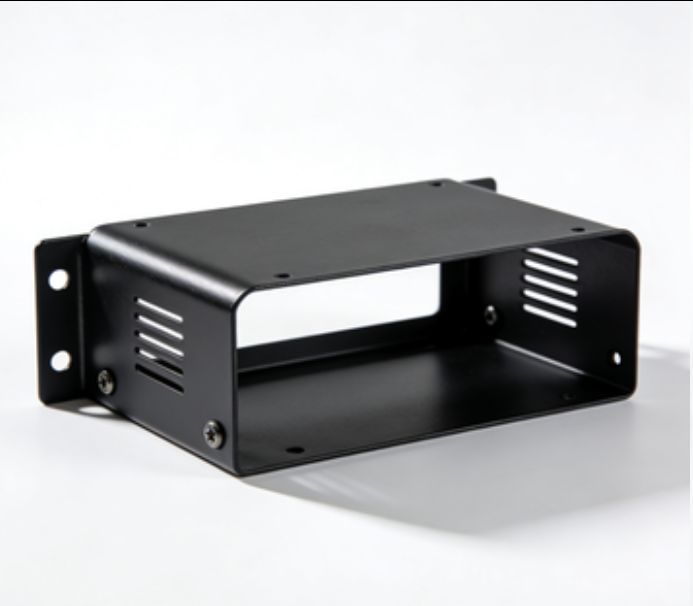
Stamping parts are a cornerstone in the manufacturing of security equipment enclosures, which house critical devices like surveillance cameras, access control panels, alarm sensors, and intercom systems. These enclosures must meet rigorous standards: they need to be tamper-resistant to deter vandalism or unauthorized access, weatherproof to withstand outdoor conditions (e.g., rain, extreme temperatures), and durable enough to protect internal electronics over a 5–10 year lifespan. Stamping technology, with its ability to produce robust, precision-engineered metal parts at scale, is uniquely suited to fulfill these requirements.
Material selection for stamped security enclosures is tailored to the equipment’s environment. For outdoor security cameras or access control panels installed in public areas, high-grade stainless steel (e.g., 316 stainless steel) is preferred. This material offers exceptional corrosion resistance—critical for withstanding salt spray in coastal regions or chemical pollutants in urban areas—and high tensile strength (up to 515 MPa), making it difficult to bend or break with tools. For indoor enclosures (e.g., alarm control panels in office buildings), cold-rolled steel (CRS) with a powder-coated finish is often used; it provides sufficient durability at a lower cost while offering a smooth, professional appearance.
The stamping process enables the creation of enclosures with integrated tamper-resistant features. Custom dies can form reinforced edges (e.g., double-folded flanges) that prevent prying, and precision-punched holes for locks or tamper-proof screws (e.g., Torx or hex-head designs) that require specialized tools to remove. For example, a stamped surveillance camera enclosure may have a one-piece body with a welded lid—formed via deep drawing (a stamping technique)—that eliminates seams where vandals could insert pry bars. Stamping also ensures consistent dimensional accuracy (tolerances of ±0.1mm), so enclosure lids fit tightly against bodies, leaving no gaps for dust, water, or tools to enter.
Weather resistance is another critical attribute, and stamping supports this through compatibility with post-processing treatments. After stamping, enclosures undergo processes like galvanization (for steel) or passivation (for stainless steel) to enhance corrosion resistance. Many are also sealed with rubber gaskets around lid edges—installed in stamped grooves—to achieve an IP66 or IP67 rating (protection against dust and powerful water jets). For instance, a stamped access control panel enclosure with an IP67 rating can withstand heavy rain or pressure washing without damaging internal circuit boards, making it suitable for parking garages or outdoor entry points.
Stamping also enables the integration of functional features directly into the enclosure design, reducing assembly time and costs. For example, stamping can form mounting brackets on the back of camera enclosures, eliminating the need for separate welded or bolted parts. It can also punch precise openings for camera lenses, microphone ports, or LED indicators—each aligned to within 0.05mm of internal components—to ensure unobstructed operation. This precision is critical for surveillance cameras, where a misaligned lens opening could block the field of view or cause image distortion.
Cost-effectiveness is a key advantage for security equipment manufacturers, who often produce thousands of enclosures annually. Stamping lines can produce up to 2,000 small enclosures (e.g., sensor housings) per hour, with material utilization rates of 85–90%—far higher than machining or casting. The initial investment in custom dies is offset by low unit costs over high production volumes, making stamped enclosures accessible for both large security firms and small-scale installers.
stamped security equipment enclosures combine tamper resistance, weatherproofing, precision, and cost efficiency—essential qualities for protecting critical security infrastructure. As security threats evolve and equipment becomes more advanced, stamping technology will remain vital for producing enclosures that balance durability and functionality.
 China management center add.
204, Building A, Phase 3, Jiewei Industrial Park, Shangmugu Community, Pinghu Street, Longgang District, Shenzhen, China
 Headquarters tel.
+86 134 3077 5139
 E-mail.


 CN
CN


