

Time:2025-12-09 Views:0
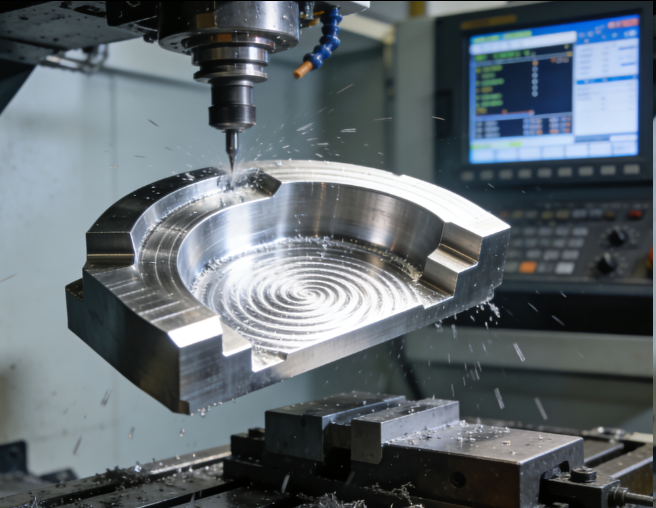
CNC Machining Robot Accessories encompass precision components used in robotic systems, such as robotic arm joints, end effectors (grippers), gearboxes, sensor mounts, and cable management brackets. These accessories are critical for ensuring robots’ mechanical stability, movement accuracy, and operational efficiency—key requirements in industries like automotive manufacturing, electronics assembly, and logistics automation, where robots perform repetitive, high-precision tasks (e.g., welding, pick-and-place operations, or palletizing).
Material selection for robot accessories depends on their functional role. High-load components like robotic arm joints and gearboxes require materials with exceptional strength and wear resistance, such as hardened alloy steels (4140 or 4340) or titanium alloys (for lightweight, high-strength applications in collaborative robots). End effectors, which interact with workpieces, may use aluminum alloys (6061-T6) for weight reduction or stainless steel (304) for corrosion resistance (in food or pharmaceutical automation). For non-load-bearing parts like sensor mounts, engineering plastics (e.g., POM or ABS) are used to minimize weight and cost while maintaining structural integrity.
Precision and tolerance are paramount. Robotic joints, which determine movement accuracy, require tolerances as tight as ±0.002mm to ensure smooth rotation and alignment—even a small deviation can cause positional errors in the robot’s end effector (up to ±0.1mm, which is unacceptable for electronics assembly). CNC machines used for these parts include 5-axis milling centers (for complex joint geometries) and high-precision turning centers (for cylindrical components like gear shafts). Post-machining processes like grinding or lapping are often used to achieve surface finishes of Ra 0.2-0.8μm, reducing friction between moving parts and extending service life.
Functional performance is another key consideration. End effectors, for example, must have precise gripping force control—CNC machining ensures consistent jaw dimensions and surface textures to avoid damaging delicate workpieces (e.g., smartphone screens). Gearboxes require precise tooth profiles (machined using hobbing or shaping processes integrated with CNC) to minimize backlash, which can affect the robot’s positioning accuracy. Additionally, many accessories feature integrated mounting holes or threads with tight dimensional control (e.g., M3 threads with H4 tolerance) to ensure compatibility with other robot components.
Quality control involves rigorous testing. Coordinate Measuring Machines (CMMs) with laser scanners verify dimensional accuracy against CAD models, while torque testing is performed on joints and gearboxes to ensure they meet load requirements. For collaborative robots, accessories may undergo impact testing to ensure safety compliance (e.g., ISO/TS 15066). With their high precision and reliability, CNC-machined robot accessories enable robots to perform complex tasks with consistency, driving efficiency in modern manufacturing.
 China management center add.
204, Building A, Phase 3, Jiewei Industrial Park, Shangmugu Community, Pinghu Street, Longgang District, Shenzhen, China
 Headquarters tel.
+86 134 3077 5139
 E-mail.


 CN
CN


