

Time:2025-12-15 Views:0
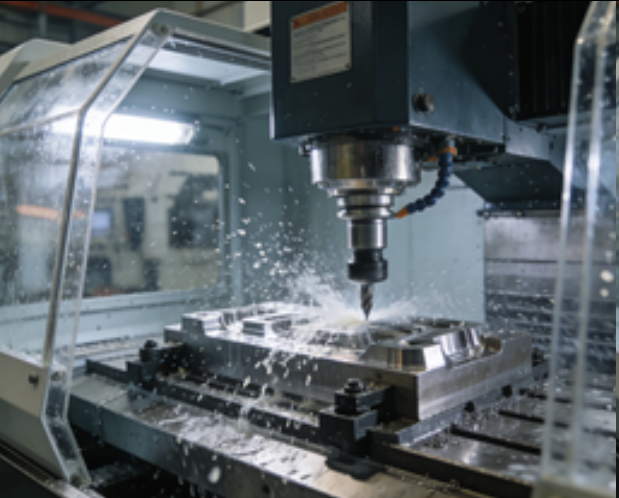
CNC (Computer Numerical Control) machining processes represent a cornerstone of modern precision manufacturing, utilizing computer-controlled systems to automate machine tool operations. The process begins with creating a 3D CAD model of the desired part, which is then translated into G-code instructions that guide the CNC machine. Common CNC processes include milling, turning, drilling, and grinding. Milling involves rotating cutting tools to remove material from a stationary workpiece, while turning rotates the workpiece against a stationary cutting tool for cylindrical shapes. Drilling creates holes using rotating drill bits, and grinding uses abrasive wheels for fine finishing.
Advanced CNC systems, such as five-axis machines, enable complex geometries by manipulating the tool and workpiece across multiple axes simultaneously. This versatility makes CNC machining ideal for industries requiring high precision, including aerospace, automotive, and medical device manufacturing. The integration of AI and machine learning further enhances efficiency by optimizing tool paths, reducing material waste, and predicting maintenance needs.
 China management center add.
204, Building A, Phase 3, Jiewei Industrial Park, Shangmugu Community, Pinghu Street, Longgang District, Shenzhen, China
 Headquarters tel.
+86 134 3077 5139
 E-mail.


 CN
CN


